
HACCP Plan Template UK Hospitality (Free 2026 PDF)
Last updated: August 2026
A HACCP plan is a documented food safety management system that identifies where hazards can enter your process, sets controls at those points, and records the monitoring that proves the controls work. It is a legal requirement for every UK food business, from a 20-cover cafe to a 200-seat brasserie. A hospitality HACCP plan needs to cover nine process steps: delivery, storage, preparation, cooking, hot holding, cooling, cold storage, reheating and serving. You can download a free template built for UK hospitality further down this page.
The reason the law is strict: the FSA estimates there are 2.4 million cases of foodborne illness in the UK each year, causing 16,400 hospitalisations, 180 deaths and around £10.4bn in societal cost (Food Standards Agency).
Then there's the version most kitchens actually have. The Environmental Health Officer walks through your kitchen and asks for your HACCP plan. You pull out a 20-page document that hasn't been updated since 2019. Pages stick together. Notes in the margins. Someone's crossed out "curry" and written "Thai pasta" in pen.
They don't look happy.
What Happens When You Don't Have a Proper HACCP Plan
It's not optional. Your local authority expects to see one - it's a legal requirement under food safety law.
Restaurants without a documented, current HACCP plan get flagged. Sometimes closed.
But here's what happens at most venues:
- You have an old template (from your supplier, printed in 2015)
- It doesn't match your actual menu (you changed your recipe, forgot to update the plan)
- No one's monitoring it (fridge temps aren't being logged, no proof of controls)
- It lives in a filing cabinet (staff don't know it exists)
- It's paper (impossible to update across multiple sites)
When the EHO asks what your critical control point is for hot holding, and your manager goes blank, that's a problem.
The HACCP Framework (Demystified)
HACCP stands for Hazard Analysis Critical Control Point. Sounds corporate. It's common sense applied systematically.
The basic idea: Identify where things can go wrong in your kitchen. Put controls in place. Monitor them. Document it.
That's it.
Some hospitality teams don't have a HACCP plan because they think it's only for factories. Wrong. It's equally applicable to a 20-cover café as it is to a 200-seat brasserie. See the FSA HACCP guidance for full detail.
The missing piece? A template built for hospitality.
Your New HACCP Plan Template
We've built a free, downloadable HACCP Plan Template designed specifically for restaurants, bars, pubs, cafes, and takeaways. It's not generic food manufacturing waffle. It's yours.
What's inside:
1. Business Details & HACCP Team
- Your site info, key staff, review dates
- Who's responsible for what
2. Scope Definition
- What products you handle
- What you do (cook, reheat, hold, serve, etc.)
3. 9 Process Steps (with full hazard tables for each):
- Delivery & Receiving - Supplier checks, contamination risks
- Storage - Dry, cold, ambient - controls for each
- Preparation - Cross-contamination, allergens
- Cooking - Temperature reaches safe levels
- Hot Holding - Maintaining temperature, time limits
- Cooling - Rapid cooling to prevent pathogenic growth
- Cold Storage - Fridge/freezer management, shelf life
- Reheating - Reaching safe temperatures
- Serving - Final checks, allergen communication
4. Hazard Analysis Tables (for every step)
- What can go wrong (biological, chemical, physical hazards)
- Your control measures
- Which are Critical Control Points (CCPs)
- Critical limits (e.g., "hot hold at 63°C minimum")
- Monitoring frequency (hourly? daily?)
- Corrective actions (what you do when things drift)
5. Validation, Verification & Review
- How you check your plan works
- Annual review checklist
6. Digital Integration Notes
- How to track everything in Aquaint (temperature logs, task assignments, compliance records)
Bonus: Tailored guidance for warehouse operations, manufacturing, and gym facilities.
Why This Template Changes Everything
You've probably got a HACCP plan somewhere. Everyone does.
But is it current? Is it being monitored? Would an EHO trust it?
This template gives you:
- Specificity - Not generic. Built for how restaurants work
- Completeness - All 9 steps covered. No gaps for EHOs to exploit
- Traceability - A monitoring schedule so you've got proof controls are working
- Scalability - If you operate multiple sites, one plan structure scales across all of them
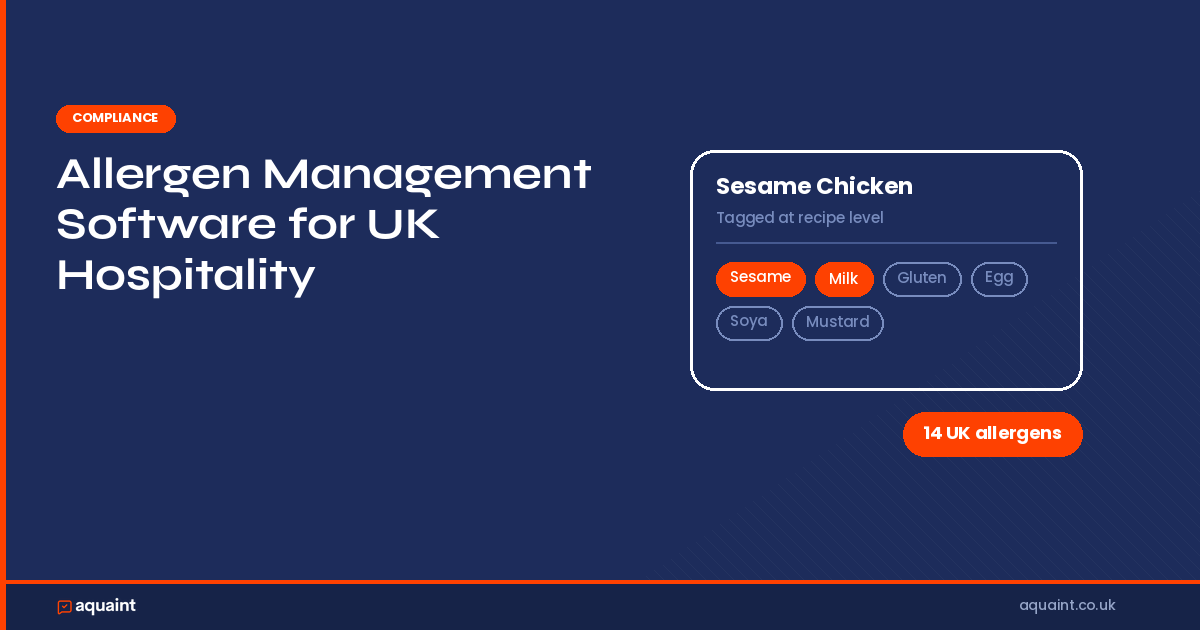
- Allergen Focus - Allergen handling gets its own section (most plans miss this until someone gets ill)
The Paper vs Digital Problem
Here's where most places stumble: they download a template, fill it in, print it, stick it in a folder.
Then no one monitors it.
HACCP on paper works until it doesn't. When a supplier changes a recipe, when your head chef swaps out an ingredient, when a new allergen enters your kitchen - your paper plan is already out of date.
Digital HACCP management with Aquaint solves this:
- Live updates - Change a procedure at one site, it syncs everywhere
- Temperature logging built in - No separate sheets
- Alerts - If a control point is missed, your manager knows immediately
- Proof - Every check is logged with who, what, when
- Reports - Pull your full compliance history for EHOs in one tap
Paper compliance is dying for a reason. Your EHO knows the difference.
Download the HACCP Plan Template
Get your free HACCP Plan Template by entering your email at the bottom of the page. Customise it, use it as a starting point. It's free.
If you want to go digital from day one, book a demo with our team about how Aquaint replaces paper HACCP entirely.
FAQs
Q: What is HACCP and why is it required in UK hospitality?
HACCP (Hazard Analysis Critical Control Point) is a systematic approach to identifying food safety risks and putting controls in place. It's a legal requirement under the Food Safety Act 1990. Every food business must have a documented HACCP plan. See the FSA HACCP guidance for details.
Q: What are the 9 steps of HACCP in a restaurant?
The 9 steps are: Delivery & Receiving, Storage, Preparation, Cooking, Hot Holding, Cooling, Cold Storage, Reheating, and Serving. Each step has identified hazards and controls. See the full template for details on each step.
Q: What is a Critical Control Point (CCP)?
A Critical Control Point is a step in your process where you can apply a control to prevent, eliminate, or reduce a hazard to an acceptable level. Common examples: cooking temperature (prevent bacterial survival), fridge temperature (prevent bacterial growth), allergen segregation (prevent cross-contamination).
Q: How often should I review my HACCP plan?
At minimum, annually. You should also review if you change your menu, suppliers, equipment, or recipes. Any significant change to your operation triggers a HACCP review.
Q: Can I use a generic HACCP template from the internet?
You can start with a generic template, but you must customise it for your specific menu, processes, and equipment. An EHO will expect your plan to reflect your actual kitchen, not a generic food manufacturing facility. Our template is already tailored for hospitality.
Q: What happens if I don't have a HACCP plan?
It's a food safety violation. EHOs may issue improvement notices, close your kitchen, or issue enforcement action. More importantly, you have no systematic proof that you're controlling food safety risks - which is dangerous for customers.
Q: Can I store my HACCP plan digitally?
Yes. In fact, we recommend it. Digital plans are easier to keep current, share across multiple sites, and produce audit trails. Aquaint handles digital HACCP management natively.
Related Reading
- UK Food Safety Temperatures - Complete Reference Guide
- How to Pass an EHO Inspection - Checklist & Best Practice
- The 14 UK Allergens - What You Need to Know
- Paper vs Digital Compliance - Why Your Team Needs Digital
- Martyn's Law - Hospitality Security Requirements Explained
- FSA HACCP Guidance
- FSA Safer Food Better Business (SFBB)
- Food Safety Act 1990


Download your free template


Let's get aquainted - sign up to our newsletter
Join our newsletter to stay up to date on features and releases.