
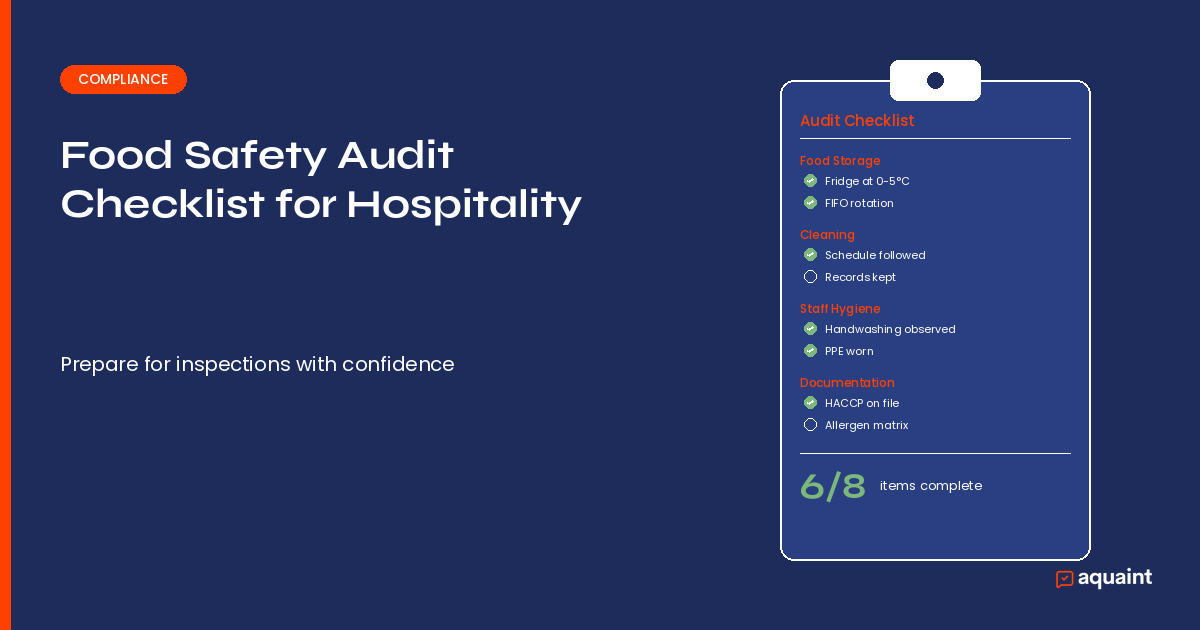
Food Safety Audit Checklist for Hospitality
Last updated: May 2026
Nobody enjoys surprise inspections. But here is the thing: if you are running regular food safety audits internally, an EHO visit should not be a source of panic. It should be a formality.
The venues that consistently score 5 on their food hygiene rating are not the ones that scramble to clean up when they spot the inspector walking through the door. They are the ones with systems running in the background every single day.
This guide gives you a self-audit checklist covering the five areas an EHO scores during an inspection, so you can identify and fix problems before they cost you points.
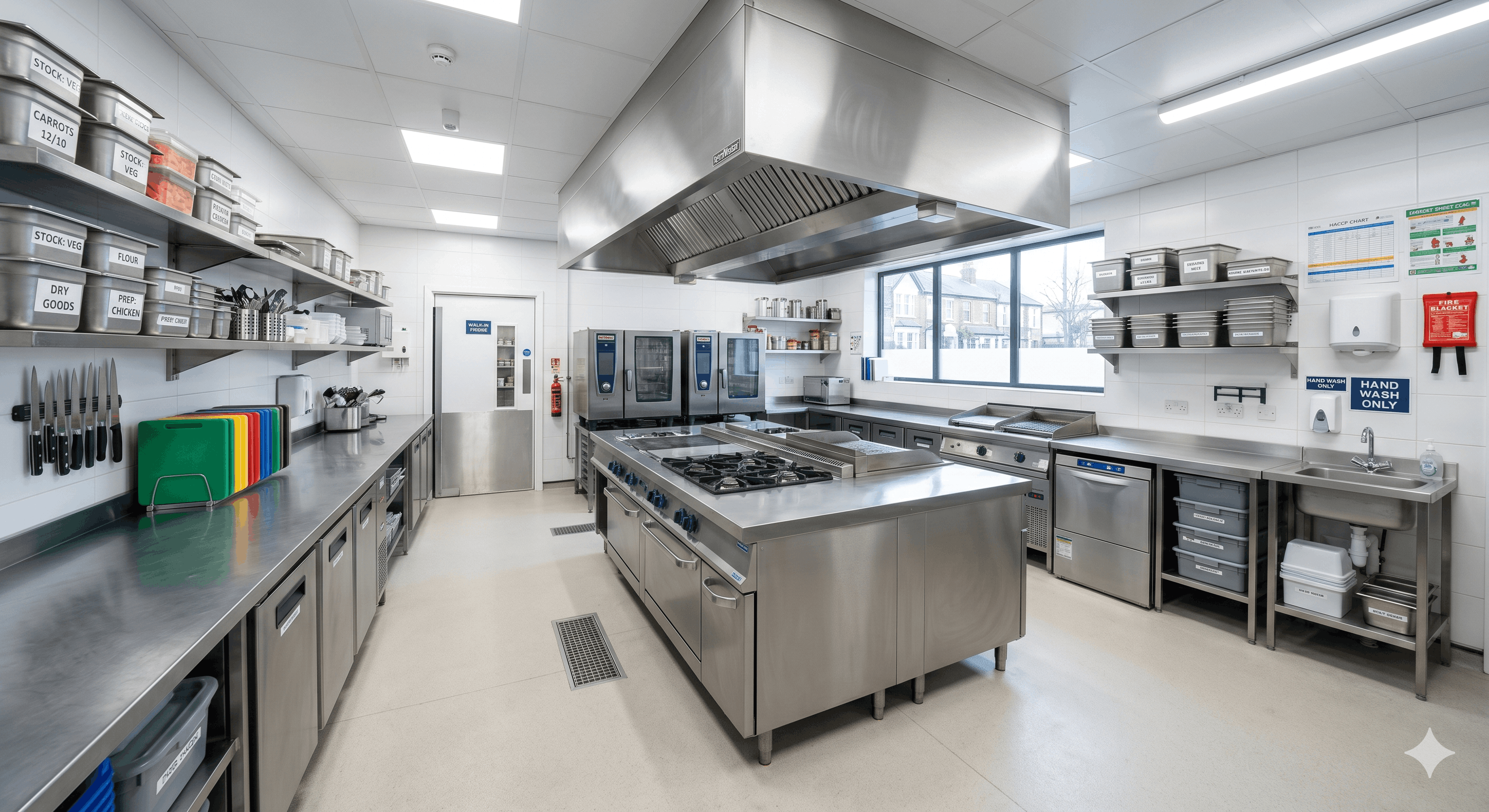
How EHO Inspections Work
Environmental Health Officers score your venue across three main categories, each rated from 0 (best) to 25 (worst). The combined score determines your food hygiene rating from 0 to 5. We cover the full process in our EHO inspection guide, but here is the summary:
- Hygiene - food handling, preparation, cooking, reheating, cooling, and storage
- Structural - the physical condition of your premises, equipment, cleaning, and facilities
- Confidence in management - your food safety management system, records, training, and procedures
Within those three categories, there are five areas that form the backbone of every inspection. Your self-audit should cover each one.
Area 1: Food Hygiene and Safety Procedures
This is about how food is handled from delivery to service. The EHO wants to see that your team follows safe practices at every stage.
Self-audit checklist
- Are deliveries checked on arrival for temperature, packaging integrity, and use-by dates?
- Is raw food stored separately from ready-to-eat food at all times?
- Are colour-coded chopping boards and utensils in use and properly maintained?
- Is food cooked to the correct core temperatures? (75C for most items)
- Are hot holding temperatures maintained above 63C?
- Is food cooled from 63C to below 8C within 90 minutes?
- Are fridge and freezer temperatures being recorded at least twice daily?
- Is food labelled with preparation dates and use-by dates?
- Are allergens managed and communicated correctly? (See our 14 allergens guide)
- Is hand washing happening at the right moments: after handling raw food, after breaks, after touching bins?
- Are probe thermometers calibrated and in working order?
What to fix before an inspection
Temperature records are the first thing many EHOs ask to see. If yours have gaps, start filling them now. Even a few weeks of consistent records shows improvement. Make sure every fridge and freezer has a visible thermometer and that your team knows the target ranges.
Area 2: Structural Compliance
This covers the physical condition of your premises. It is the area where problems are most visible and, fortunately, often the easiest to fix.
Self-audit checklist
- Are walls, ceilings, and floors clean, in good repair, and free from grease build-up?
- Is all equipment (fridges, ovens, prep surfaces) clean and well-maintained?
- Are hand wash basins stocked with soap, hot water, and paper towels?
- Is the hand wash basin being used only for hand washing (not defrosting food or washing equipment)?
- Are pest control measures in place? Are there signs of pest activity?
- Is waste stored correctly in lidded bins and removed regularly?
- Is lighting adequate in food preparation areas?
- Are cleaning schedules in place and being followed?
- Is ventilation adequate, particularly above cooking equipment?
- Are staff changing facilities separate from food areas?
- Are customer and staff toilets clean and properly supplied?
What to fix before an inspection
Walk your premises with fresh eyes. Look at the ceiling tiles above the kitchen. Check behind the fridges. Open the cupboard under the hand wash basin. These are the spots EHOs check and managers overlook. If something is broken, get it fixed or at least show evidence that a repair has been arranged. EHOs look favourably on venues that acknowledge issues and demonstrate action.
Area 3: Confidence in Management
This is where many venues lose points, and it is the hardest category to recover quickly. Confidence in management is about proving that food safety is embedded in how you run the business, not something you do when an inspector visits.
Self-audit checklist
- Do you have a documented food safety management system (HACCP-based)?
- Is your HACCP plan up to date and specific to your operation?
- Are food safety records (temperatures, cleaning, training) complete and accessible?
- Can you demonstrate what corrective actions you take when something goes wrong?
- Are staff food safety training records current?
- Is there a named person responsible for food safety in the business?
- Can you show evidence of regular internal audits or checks?
- Are supplier records and specifications available?
- Do you have documented procedures for handling complaints and incidents?
- Is your allergen management system documented and demonstrable?
What to fix before an inspection
If your documentation has gaps, be honest about it but show what you are doing to fix the situation. An EHO would rather see a venue that acknowledges weaknesses and has a plan than one that pretends everything is perfect. Start completing records consistently today, even if the past few months have gaps. Three weeks of solid, daily records demonstrates intent and capability.
Area 4: HACCP and Food Safety Management
HACCP (Hazard Analysis and Critical Control Points) is the framework that underpins food safety management in the UK. Your EHO expects to see a HACCP-based system that is relevant to your specific operation.
Self-audit checklist
- Have you identified all biological, chemical, and physical hazards relevant to your operation?
- Are critical control points (CCPs) identified for each process? (Cooking, cooling, reheating, hot holding)
- Are critical limits set for each CCP? (e.g., cooking to 75C core temperature)
- Are monitoring procedures in place and being followed? (Temperature logs, visual checks)
- Are corrective actions documented for when a CCP fails? (e.g., food not reaching temperature)
- Is the HACCP plan reviewed at least annually or when processes change?
- Are prerequisite programmes in place? (Cleaning schedules, pest control, training, maintenance)
- Is the plan specific to your venue, not a generic template?
What to fix before an inspection
Generic HACCP plans downloaded from the internet will not impress an EHO. Your plan needs to reflect your menu, your layout, your equipment, and your processes. If you are using a template, customise it. Add your specific dishes, your temperature monitoring schedule, and your corrective action procedures. Our HACCP plan template guide covers how to build one properly.
Area 5: Temperature Control
Temperature control gets its own section because it is the single most common reason venues lose points. It is also the easiest area to get right with the proper system.
Self-audit checklist
- Are all fridges operating between 0C and 5C?
- Are all freezers operating at -18C or below?
- Are fridge and freezer temperatures recorded at least twice daily (opening and closing)?
- Is food being cooked to a core temperature of at least 75C?
- Is reheated food reaching 75C (82C in Scotland)?
- Is hot food being held at 63C or above?
- Is cold food displayed below 8C (or within the 4-hour rule if not refrigerated)?
- Are cooling records showing food reaching below 8C within 90 minutes?
- Are probe thermometers being calibrated using ice water or a calibration check?
- Is there a corrective action procedure when temperatures fall out of range?
- Are delivery temperatures being checked and recorded?
What to fix before an inspection
Buy a reliable probe thermometer if you do not have one. Calibrate it. Train your team on how and when to use it. Start recording temperatures on a proper schedule. If a fridge is running warm, get it serviced or replaced. An EHO finding a fridge at 9C with no record of the team noticing or acting is a guaranteed points deduction.
For the full temperature requirements, check our guides on cooking and reheating temperatures, hot holding, and fridge and freezer temperatures.
Running Your Self-Audit
A self-audit is only useful if it is honest. The goal is not to tick every box. It is to find the gaps before an EHO does.
Here is how to run an effective self-audit:
- Schedule it - Run a full audit monthly. Shorter daily and weekly checks should cover temperature records, cleaning schedules, and allergen information.
- Use a different person - If possible, have someone who does not work in the kitchen every day conduct the audit. Fresh eyes catch things familiarity misses.
- Document everything - An audit without documentation is a conversation, not an audit. Record your findings, note what needs fixing, assign responsibility, and set deadlines.
- Follow up - The audit is worthless if nobody acts on the findings. Check that corrective actions were completed. If they were not, find out why.
Going Digital with Self-Audits
Running self-audits on paper creates the same problems as any paper-based compliance system. Forms get lost, follow-up actions get forgotten, and there is no easy way to track trends over time.
With Aquaint, you can build your self-audit as a digital checklist that guides your team through every area. Completed audits are timestamped, stored automatically, and accessible from any device. If an issue is flagged, it can be assigned to a team member with a deadline. The whole process generates the kind of audit-ready reports that EHOs like to see.
For multi-site operators, digital self-audits mean you can compare compliance across locations without visiting each one. You can spot which sites are falling behind on temperature records, which ones have outstanding maintenance issues, and where training gaps exist.
If you are still running self-audits on paper, or worse, not running them at all, this is one of the highest-impact changes you can make to your food safety management. The venues that score 5 consistently are the ones that check themselves before the inspector does.
Frequently Asked Questions
How often should I run a food safety self-audit?
A comprehensive self-audit covering all five areas should happen at least monthly. Daily checks (temperatures, cleaning, allergens) and weekly checks (structural condition, stock rotation, equipment) should run alongside the monthly full audit. The more frequently you check, the fewer surprises you get during an EHO visit.
Can a good self-audit guarantee a 5-star rating?
No audit can guarantee a specific score, because the EHO will assess what they observe on the day. However, venues that run consistent self-audits and act on findings are far more likely to score well. The discipline of regular auditing builds habits that are visible to an inspector. If your records are complete, your premises are clean, and your team can answer questions confidently, you are in a strong position.
What should I do if my self-audit reveals serious problems?
Fix the most critical issues first, particularly anything that poses an immediate risk to food safety. Temperature control failures, cross-contamination risks, and allergen management gaps should be addressed the same day. Document the problem, the corrective action taken, and who was responsible. If an EHO visits and sees that you identified and resolved an issue, that demonstrates good management, not poor compliance.
Who should conduct the self-audit?
Ideally, someone with food safety training who is not the head chef or kitchen manager. The person who runs the kitchen every day may have blind spots. A manager from another department, an area manager for multi-site operations, or even a trained supervisor can bring the objective perspective needed. Whoever conducts it should have the authority to require corrective actions.
Do I need to keep self-audit records for EHO inspections?
There is no specific legal requirement to show self-audit records to an EHO. However, presenting them is one of the strongest signals of good management. It demonstrates that you are proactively managing food safety rather than waiting for an inspection to identify problems. Most EHOs will look favourably on well-maintained audit records, and they can help you score better in the confidence in management category.


Download your free template


Let's get aquainted - sign up to our newsletter
Join our newsletter to stay up to date on features and releases.